The Real-Life Heroines of the Twenty-First Century
Written by Annastatia Brooks
Thumbnail & Banner Photo by Ygor Lobo on Unsplash
Content Warning: This article contains information on sensitive subjects such as child marriage, female genital mutilation, state violence, colonialism, and transphobia. Please read with care.
Dystopian stories and young adult novels tend to have a prevalent theme: young women and girls leading a revolution, defeating the villain, or saving the day. Some of the most popular examples of this include Katniss Everdeen from The Hunger Games series, who helped overthrow an oppressive government, and Tris Prior from the Divergent series, who contributed to the end of the faction system. Susan and Lucy from The Chronicles of Narnia help defeat an evil witch, and both rise to power as queens of Narnia. Meg Murry from A Wrinkle in Time embarks on a wild adventure, fights the dark entity corrupting the universe, and saves her family. America Singer from The Selection series becomes the queen of Illéa and abolishes the caste system. These plots, and even the characters themselves, might seem unrealistic. In times of despair, when the world feels it is ending, and unjust powers reign over the people, is it really girls who lead the way? Do girls really fight presidents, rewrite social systems, and defeat dark powers? History proves that the answer is yes.
While icons like Malala Yousafzai and Greta Thunberg are famous for their activism for women’s rights and the environment, there are so many other young girls who are lesser known but are still working towards a better future. Here are a few young women and girls from around the world who are fighting for their rights, the well-being of others, and the well-being of the planet.
Jakomba Jabbie - Gender Equality Activist

Photo by We Need to Talk
Jakomba Jabbie’s work primarily focuses on girls’ access to science education as a tool to fight against the struggles that come with child marriages. At just 16, she founded a robotics club at her school in the Gambia, allowing girls to have a safe place to learn about things otherwise inaccessible to them. She explained at the UN’s Equality in Law for Women and Girls by 2030 initiative that girls in child marriages will often get pregnant while school-age, resulting in expulsion from school, preventing them from getting an education. She called for a new law to be implemented, criminalizing child marriages, and therefore allowing girls to have more options in life. Jabbie is adamant that education is absolutely necessary for opening doors for girls, allowing them to have a higher quality of life as women.
Ahed Tamimi - Palestinian Activist and Writer
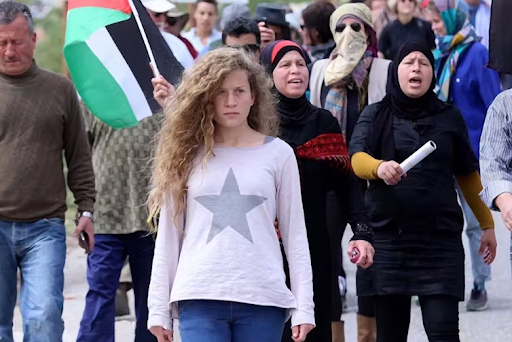
Photo by Haim Schwarczenberg on Wikimedia Commons
Ahed Tamimi is from the Israeli-occupied West Bank. In 2017, at just 16 years old, Tamimi was arrested by the Israeli government for slapping a soldier who refused to leave her family's property. In 2023, she was arrested again, this time for a post on Instagram (which family members say she didn’t write and was posted from a fake account). The 2023 arrest left her with ongoing stomach, throat, and sleep issues caused by her time in the Israeli prison. She is a co-author of the book They Called Me a Lioness: A Palestinian Girl's Fight for Freedom, which discusses her dark childhood and her experiences protesting in non-violent demonstrations against the Israeli occupation of Palestine.
Julieta Martinez - Climate Activist, Eco-feminist, and Founder of Tremendas
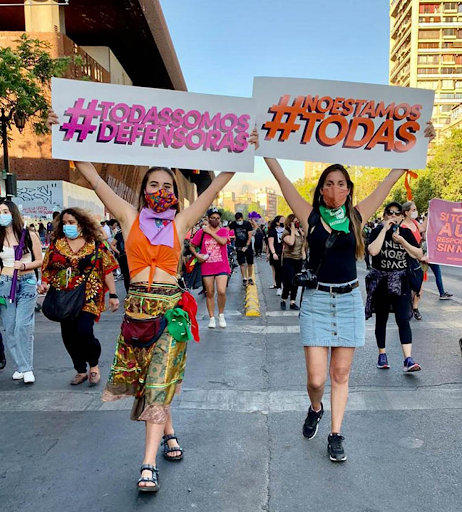
Julieta Martinez, from Chile, founded the Tremendas platform at eighteen years old. Tremendas is a platform that “promotes the empowerment of girls, adolescents and young people by inviting them to put their skills and talents at the service of the community to generate social impact”. In addition to this, Martinez has participated in a plethora of conferences and summits all around the world. She spoke at the COP 25 in Madrid, the COP 26 in Glasgow, the Ashoka Changemakers Future Summit, the 2021 Congress of the Future, the UN Women and EU Geneva's "Driving the change, young women activists for #EqualFuture" event, the Foro Generación Igualdad México, and in an intergenerational panel of The Economic and Social Council. She also attended the United Nations World Youth Plenary as well as the Latin American and Caribbean Women's Summit. Notably, in 2021, the government of France invited her to speak on a panel with former U.S. Secretary Hillary Clinton at the opening ceremony of the Generation Equality Forum in Paris. Finally, Martinez is an author, having published No soy Julieta: Sobre el activismo, a book on activism and speaking out.
Autumn Peltier - Indigenous Rights Advocate, Anishinabek Nation Chief Water Commissioner
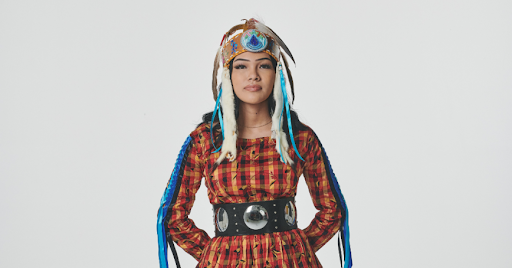
Photo by Jessica Deeks on Royal Roads University
Autumn Peltier, from Manitoulin Island, Lake Huron, is the Anishinabek Nation chief water commissioner. Her community (ironically, an island with a lake located in a lake), like many Indigenous communities, does not have access to clean, safe drinking water. At the age of eight, Peltier decided to become a water advocate for her community. In 2016, she was chosen by the Assembly of First Nations to meet with Prime Minister Justin Trudeau. Her role was to present him with a ceremonial copper water bowl to emphasize his duty to protect Canada’s water. Though she was only twelve, she looked him in the face and said, “I am very unhappy with the choices you’ve made”. Those choices were Trudeau deciding to approve the development of not one, but two fossil-fuel pipelines. Peltier stars in the short documentary film The Water Walker, available to watch on Crave.
Rebekah Bruesehoff - Trans Speaker, Activist, and Author

Photo by Kevin Dietsch/Getty Images on Arkansas Advocate
After garnering attention for a photo of her as a child holding a sign saying “I’m the scary transgender person the media warned you about”, Rebekah Bruesehoff decided that she could use her position as a viral sensation for good. She has become an advocate for 2SLGBTQIA+ representation, speaking across the United States at conferences, galas, and schools. Bruesehoff went on to publish an Op-Ed in the Philadelphia Inquirer and co-author A Kids Book About Being Inclusive. Her hard work advocating for transgender kids and the 2SLGBTQIA+ community has been greatly rewarded; Bruesehoff has been featured in GLAAD x Teen Vogue’s 20 under 20, The Advocate’s 30 under 30, Insider NJ’s Out 100: LGBT Power List, she is a recipient of Ms. Foundation’s Women of Vision Award, and she is a TIME Kid of the Year finalist.
Latifatou Compaoré - Female Genital Mutilation Activist and Singer
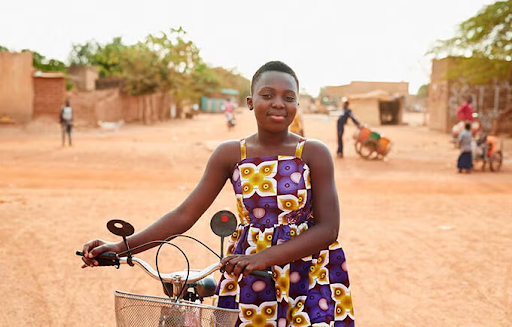
Photo by Luca Zordan for UNFPA on UNFPA
In Burkina Faso, female genital mutilation (FGM) is a common practice, as it is across Africa, the Middle East, and Asia. This procedure involves any injury to the female genitals, including the removal of any part of the genitals and sewing the area shut. This procedure is done on children (as young as infants) to ensure they will not experience pleasure, ensure virginity, and encourage marital fidelity. FGM is involuntary and is incredibly dangerous, often leading to complications such as infection, cysts, menstrual difficulties, or even death. Latifatou Compaoré’s mother was subjected to FGM, but instead of continuing the cycle, she decided her daughters would never have to undergo the procedure. Latifatou Compaoré became an advocate for ending FGM through art. Her song “Excision”, about the injustice of FGM, was played on national television and national radio. She has gone on to sing and share other songs about the practice, not just raising awareness about the widespread issue of FGM, but also calling for its permanent end.
Haana Edenshaw - Environmental Justice and Indigenous Rights Activist
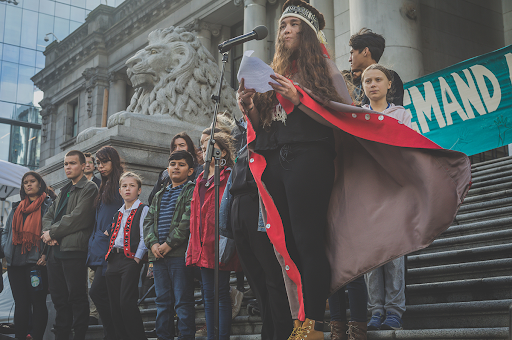
Photo by Earth Island Journal
Haana Edenshaw, at just seventeen, decided to sue the Canadian federal government for its contribution to the climate crisis, along with fourteen other Canadian youth. A member of the Tsiits Gitanee clan of the Haida Nation from the Haida Gwaii archipelago, Turtle Island, Edenshaw has a close connection to the land, and she recognizes that her culture, language, and history are intrinsically tied to Haida Gwaii. Essential resources like fish, seaweed, and yellow cedar are being negatively affected by climate change; yet, the Canadian government continues to take no action. Edenshaw says that “due to climate change, I have lost any semblance of cultural security, and my food security is at risk too … A healthy community needs a clean environment.” Security, quality of life, and human rights are included in the Canadian Charter, and the Canadian government’s failure to act and fight against climate change is a direct infringement of these rights. For her activism, Edenshaw is a recipient of Earth Island’s 2020 Brower Youth Awards.
Conclusion
While these young women don’t wield any swords, their words shouted at UN conferences and their brave actions against sexism, violence, oppression, and unjust governments are weapons in themselves. Even without magical powers, girls manage to make a tangible change in the real world. It’s no fairytale; young girls really are the ones who stand tall, leading people from every demographic to a better future. They see a vision of a world where everyone is treated equally, everyone has access to education, all people are free, and the earth is cared for the way it deserves. Then, they courageously fight to bring that vision to life, as real-life heroines.