
City Critters: Halifax’s Urban Wildlife
Written by Annastatia Brooks
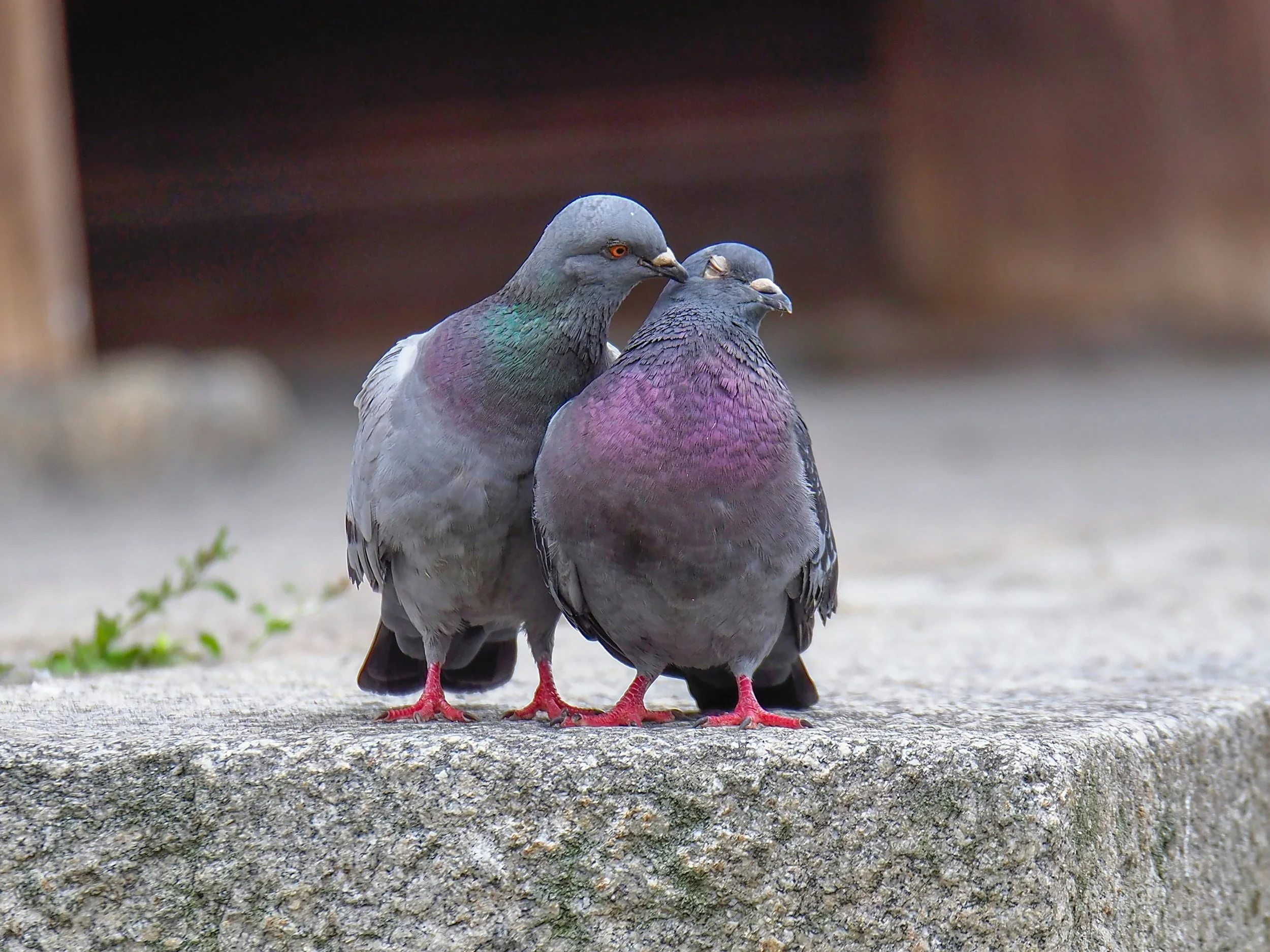
Thumbnail & Banner Photo by Hkyu Wu on Unsplash
Halifax is well populated, bustling with energetic and interesting… critters! Whether they are common rodents or the usual birds, urban animals have their own charm and beauty, despite the preconceived opinions people have of them. This article will share information about and resources on four special urban animals found in Halifax.
Rock Pigeons
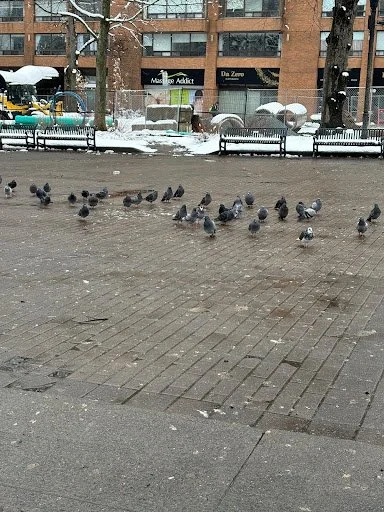
A flock of pigeons in Victoria Park
Photo by Annastatia Brooks
Rock pigeons, or common pigeons, are familiar fellows to spot around Halifax. Victoria Park almost always has a flock hanging around by the statue of Robert Burns, and they can also be seen all over the city. Pigeons love seeds, but they will eat human scraps, too. They are also super clever! If pigeons are taken from their home, blindfolded, and released, they can find their way home using their sense of hearing and smell, and by using Earth’s magnetic fields. Rock pigeons were even used in both World Wars to carry messages for the U.S. military.
Though many see pigeons as pests, and though they do transmit diseases, they definitely have a few fans. Pigeon Friendz (@halifaxpigeon) posts photos and videos of pigeons all over Halifax. Biggest Pigeon Lover in Halifax (@dal.pigeons) also shares pictures of pigeons living in Halifax, plus a few memes and fan submissions.
If you’re interested in looking for rock pigeons or other urban birds, check out the Dalhousie Birding Society! SMU students are welcome too!
American Red Squirrels
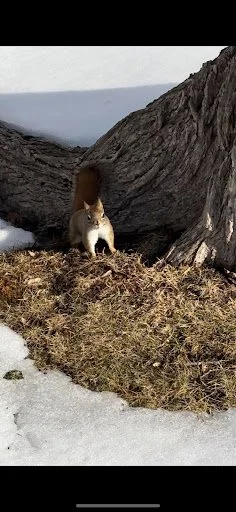
An adorable squirrel spotted on the SMU campus
Photo by Annastatia Brooks
American red squirrels are abundant in Halifax. You may have noticed them scurrying around campus! They live primarily in coniferous forests and mainly eat evergreen pinecones. Squirrels are active during the daytime, so they’re easy to spot during an afternoon walk or a picnic at Point Pleasant Park.
If you own a house, though, these critters might prove to be a nuisance. They love homes and use them as shelters for raising their babies and storing food. They especially love chewing on wires to use the casing as nest material. Nevertheless, they are still a delight to spot during your city escapades.
Brown Rats
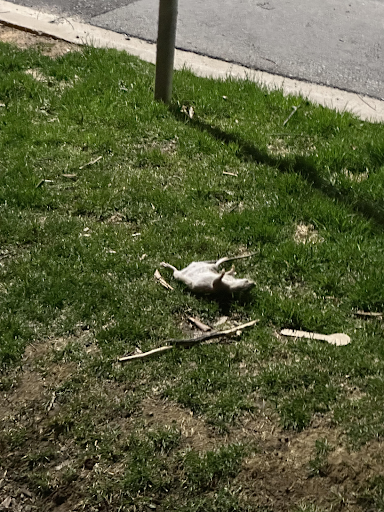
A dead rat on South Park Street, Halifax
Photo by Sarah Chiasson
Brown rats have made their appearance in Halifax over the past few years. Several factors seem to be the cause of their apparent population boom. Halifax is a port city, which commonly have rat problems thanks to critters catching rides in cargo or hiding in packing material. Halifax is also in the midst of a construction boom, naturally leading to a rat boom. Rats enjoy privacy and don’t try to get in the way of humans, but construction, which often comes with digging, drilling, and banging, disturbs rats hiding underground and forces them to the surface. So, while you may be seeing more rats in the city, this doesn’t necessarily mean there are more of them, but that more of them are visible.
CBC has been reporting on Halifax’s rats as far back as 2016, and a 2021 article by CTV News discusses Dartmouth’s rat issue, showing the rodent’s reign extends beyond the city of Halifax, even in recent times.
Though rats are very clever creatures, and domestic rats are adorable, city rats can be pests. To prevent rats from entering your home, Orkin Pest Control suggests ensuring your walls and foundation are free of cracks, your vents are screened, you clean gutters that could be clogged, you store garbage properly, and you make sure there is weather stripping surrounding entrances like windows and doors.
European Starlings
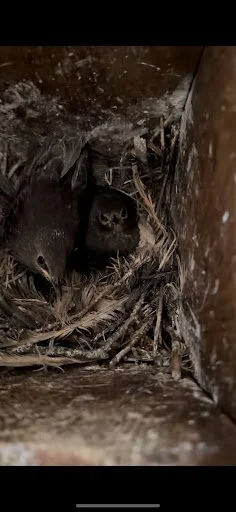
Twenty-one-day-old starlings in their nest box
Photo by Sarah Chiasson
These beautiful birds can be spotted all over Halifax. In fact, European starlings have a special tie to SMU; Dr. Colleen Barber’s lab specialises in studying parental investment and mate choice in starlings. Perhaps you’ve seen some nest boxes in the trees around campus? Those are starling homes!
Sarah Chiasson is an Environmental Science Honours student in her fourth year of studies. During the summer, she worked with Dr. Colleen Barber’s lab as part of her honours project. Sarah’s work included being a field hand, gathering data, helping master's students in the lab, and conducting her own research project. Sarah is focusing her honours studies on intraspecific brood parasitism, a reproductive strategy found in European starlings.
This interview has been edited for clarity.
Q: What got you into studying starlings?
Sarah: “I took an ecology course in my second year at SMU, which I found fascinating, and I wanted to know more about animals and their behaviour because they do some pretty cool stuff. I looked into summer research positions and reached out to Dr. Colleen Barber, who is studying behavioural ecology with starlings as the study subject.”
Q: Why are European starlings so special?
Sarah: “Starlings are very fascinating birds! They make for great study subjects because they're very abundant and very hardy as a species. This means we can study them without putting them under too much stress, which helps us study the behaviour of avian species without impacting more vulnerable species.”
Q: What can we do to ensure that starling populations in Halifax thrive?
Sarah: “Starlings are abundant, and they’re not struggling, but the best thing humans can do is stop the mentality that city critters deserve to die. This becomes more of a problem in the long run when people have the idea that starlings deserve to die, so when populations decrease drastically, people won't care enough. Just because they’re not pretty like pandas and polar bears doesn’t mean we shouldn’t care about them.”
Sarah suggests keeping an eye out for injured starlings and other wildlife while walking through the city. She recommends that if you find any hurt animals, you can call Hope For Wildlife. They will take in any animal that is injured, without being biased, and will help any critter they can!
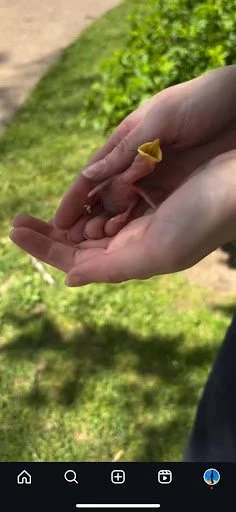
A baby starling asking Sarah for food
Photo by SMU Science on Instagram
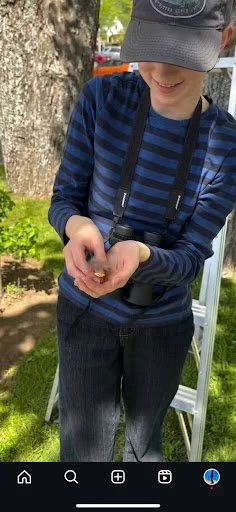
Sarah holding a baby starling
Photo by SMU Science on Instagram
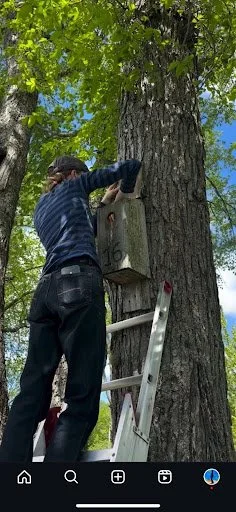
Sarah checking a nest box on the SMU campus
Photo by SMU Science on Instagram