
A Survival Guide for Chronically Ill Students
Written by Annastatia Brooks
Thumbnail & Banner Photo by Elisa Ventur on Unsplash
The health information in this article is an information resource. Do not treat your medical conditions or self-diagnose based on the health advice provided. Always consult a medical professional before making any healthcare decisions.
University is hard, being chronically ill is hard, but studying while also battling a chronic illness is even harder. You might be heading to university for the very first time, wondering how you’re going to juggle sickness and school responsibilities, or you might be graduating soon and trying to figure out ways to ease your struggles in your final year. Whatever your situation, whatever your illness, I've got you. Here are some of my favourite tips and tricks for surviving (because sometimes surviving is all we can do) while also getting a degree.
Listen to Your Body

University life is tiring for most people, but for those with chronic illness, the day-to-day student life can be overwhelming. It is crucial to conserve your energy so you can pace yourself. Adopting the spoon theory can be one of the most helpful things you can do as a person with a chronic illness. Having a visual representation to picture the amount of energy you have each day can help you determine where to spend the energy that you do have. It’s also important to recognise that with chronic illness comes chronic fatigue, and even mental illnesses related to this exhaustion. You have to have grace for yourself, you have to be patient with yourself, and you must rest when your body demands it in order to do your best!
Communicate Your Struggles

It’s crucial that your loved ones understand your limits! Even if they aren’t able to help you out by taking out the trash or picking up some extra groceries, they will still be aware that you are struggling. This helps create an understanding, reliable support system you can lean on when times get tough. If you are a family member or a friend of someone who is chronically ill and you want to be there for them, this article has some great advice on how to give meaningful support.
You can also discuss your struggles with professors, explaining that you are ill and might need multiple extensions. While they don’t always have to provide it, it never hurts to be clear about what you’re experiencing and how they can accommodate that. If necessary, you can fill out a Declaration of Extenuating Circumstances. Don’t forget that the Fred Smither’s Center can help you out with this as well; if you have a diagnosed disability, they can inform professors that you will need extra extensions throughout the year. Don’t be afraid to ask for help! Needing accommodations is not something to be ashamed of.
Set Up Systems for Yourself and Build Healthy Habits
Your life is probably going to look a bit different from other students’ lives. Your dorm is probably stocked with medication, your schedule is filled with both due dates and doctors' appointments, and a Friday night might be a night in with a hot compress on. That’s okay! It’s so important to build healthy habits, recognise your limits, and set up systems that work for you.
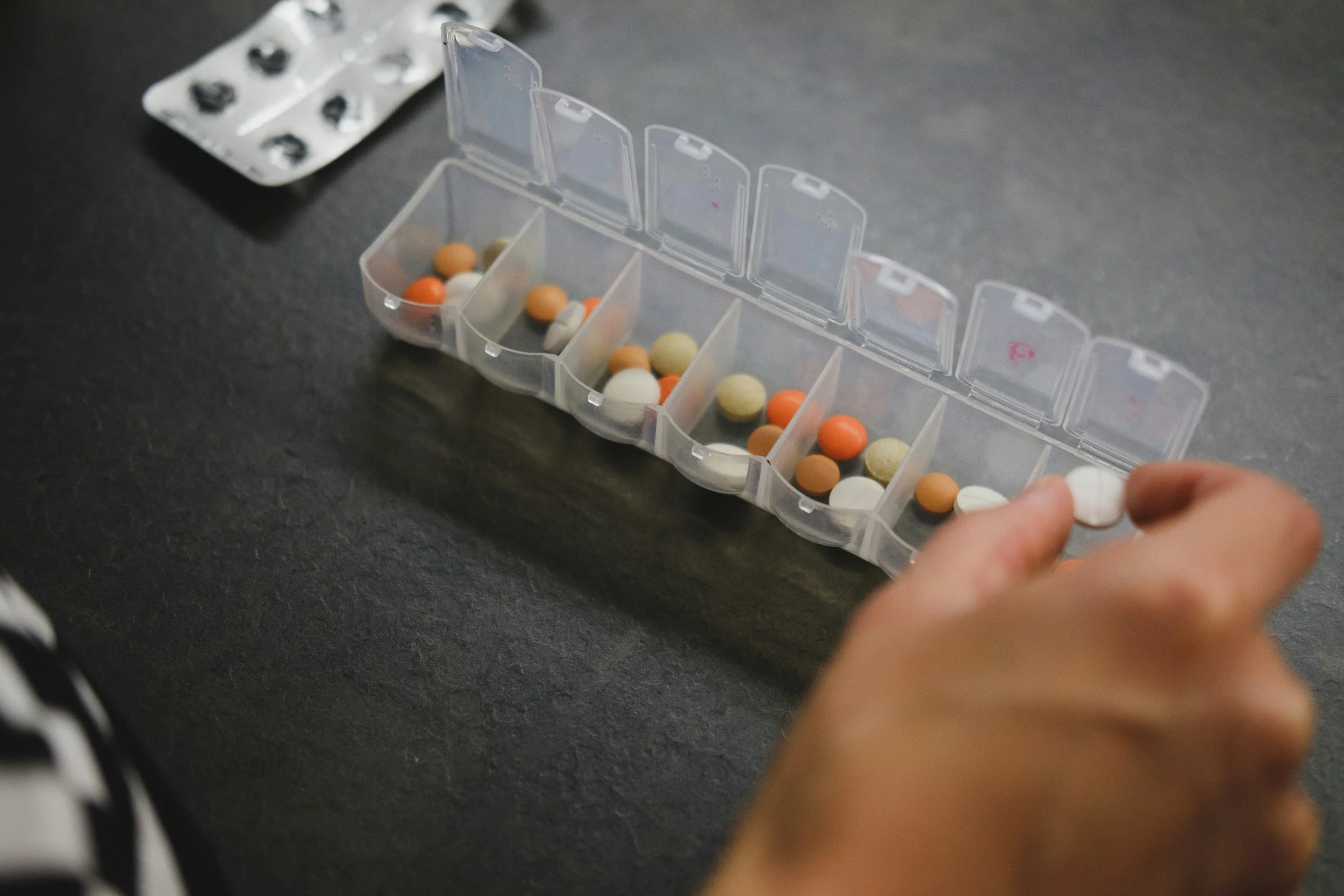
Keep track of medications, vitamins, and supplements with a weekly pill organizer.
Use Google Calendar, Outlook Calendar, or another scheduling system to make sure you never miss an appointment.
If you are able to finance it, allow yourself to order groceries online and have them delivered to your home. This works in a dorm, too, as long as you go to the lobby to pick up your order. SMU Late Night Delivery provides meals through Hey Chef from Wednesday to Sunday, from 10:00 pm to 2:00 am. Though you do have to go to Dockside to pick up your food, this is a nice way to have a cooked meal using flex dollars.
Again, if it’s in your budget, Uber can be really useful to get you to and from appointments (and the grocery store). Sometimes the walk to the bus stop and standing while waiting are just too much to handle when you’re already overwhelmed or in pain.
Mobility aids like canes, walkers, rollators, crutches, or wheelchairs could be an investment that will allow you to move around more freely.
Plan your adventures around accessibility. Plenty of cafes, stores, and museums have sensory-friendly hours that may make the experience of being out in a crowded place more bearable, especially if you have anxiety or a Sensory Processing Disorder associated with an illness. Some places, like Glitter Bean Cafe, even have mandatory mask days for those who are immunocompromised or especially susceptible to illnesses.
Build a Grab-and-Go Bag

Here are some great tools and items to have in your bag at all times! My favourite hack is to leave all these essential items in a small bag, like a pencil case or makeup bag. Then, you can stick it in your tote bag for a cafe trip, in your purse for shopping, or in your schoolbag for classes.
Ingredients for making a grab-and-go bag:
Fidgets:
Whether it be for anxiety caused by your chronic illness, a coping mechanism for pain, or a tool for helping with Sensory Processing Disorder, fidgets are a fantastic tool. There are so many different kinds to choose from, including silent ones (perfect for bringing to lectures), squishy ones, magnetic ones, and interactive ones.
Travel packs of painkillers:
Advil and Tylenol have super convenient travel packs of a small number of pills, making them perfect to bring on the go.
These are used to measure blood oxygen levels and take a pulse. You can even get convenient carry cases, too!
Single-use electrolyte packets
Some illnesses, like Postural Tachycardia Syndrome (POTS), Addison’s Disease, and orthostatic intolerance syndromes, require a high sodium intake.
A snack:
Whether salty (for sodium), sweet (for sugar levels), or something rich in carbs (for energy), a prepackaged snack is always great to have on hand.
Prescription medication
Travel moisturizer:
Perfect for quick eczema relief.
Reusable face mask:
Even though COVID-19 isn’t so prevalent anymore, many clinics and hospitals still require face masks. Also, if you or someone close to you has an autoimmune disease, it is safest to wear a face mask in public anyway.
Portable fan:
A lot of chronic illnesses (and medications used to treat them) come with overheating as a symptom or side effect.
Instant cold pack:
Also great for preventing overheating!
A symbol of hidden disabilities, the sunflower lanyard is a tool that informs people you may need additional support or extra time. You can even personalize your ID card to accurately represent your disability. Though a disability is not a chronic illness, many chronic illnesses also count as a disability. Check out the list of disabilities here to see if your chronic illness is represented.
Additional Resources
Though some days you might feel like it, you’re not alone! SMU offers lots of support for students who are struggling. The Counselling Center provides peer support, self-education resources, and counseling services in-person, online, or by phone. The SMU Health Clinic can assist with health form completion, injections, medical condition diagnosis and treatment, medical exams and consultations, mental health care, prescriptions, and referrals to specialist care. To see the full list of services, click here. SMU also provides a health plan which covers prescription drugs, counselors, psychologists, physiotherapists, massage, chiropractors, and more. Finally, the Fred Smithers Center provides Accessibility Advisors, academic accommodations such as extended time and notetaking support, test and exam accommodations, and Peer Success Coaches for students with disabilities. To determine whether or not your chronic illness is a disability, talk to your healthcare provider.
I hope these tips can help you on your journey to getting a degree, at whatever pace you need, using as many accommodations as you require. Never be afraid to advocate for yourself and ask for help in order to live your best life while attending university!