
Accessible Activism in a Changing World: How You Can Make a Difference
Written by Annastatia Brooks
Thumbnail & Banner Photo by Etienne Girardet on Unsplash
“Activism” can seem like a big word. To you, successful activism might feel like an unachievable concept, something reserved for non-profit workers, or something only seen at street protests. The truth is, activism is a possibility for all of us, no matter where we come from or what training we have. You don’t need a Social Justice degree to learn how to make a difference in your community and how to fight alongside the marginalised and oppressed. Here, you will find a list of all sorts of ways you can partake in activism and resistance, no matter your abilities.
Educate Yourself
There are fantastic resources available to everyone for free that you can use to educate yourself on social issues and simple ways you can make a huge difference. The Everyday Activism Network offers guides and slide shows on topics like “How To Be Anti-Abelist”, “What is Radical Imagination?”, and “End Hunger and Food Insecurity”. Topics can be as simple as “How to be More Generous” and “How to Donate Goods” to more complex ideas like “Defining Tolerance and Civility” and “End Gender Based Violence”.
Volunteer
One way to partake in activism is through protests like marches, encampments, and sit-ins, but these are not always a possibility for everyone. If you’re not in a situation where you can risk arrest (like being the main provider for a family), you may see going to a sit-in where there could be police interference as too dangerous. If you have a physical disability, a march might take too much of a toll on your health. Even people with sensory processing disorders (such as neurodivergence) may find the atmosphere of a crowded march with chanting and little personal space too overwhelming. This doesn’t mean that you can’t support those who are marching, though! You can volunteer your time behind the scenes to help plan the protest event, make posters for the protest, design the digital advertisements, or spread the message on social media. If you are financially privileged, you can donate money to the organisation that is protesting, or donate supplies such as water, facemasks, food, and first-aid kits.
Donate
Donating to organisations is also an amazing way to help from behind the scenes. Even donations as small as a dollar can contribute to making a difference, whether locally or globally.
Local to Halifax
Global Aid

Petitions
A petition is a request to an authority or an organisation made by a group of people, usually surrounding a decision that is going to be made or a law that will be passed by elected representatives. Signing petitions is powerful because the more signatures the petition has, the greater the demand for change. You may think of petitions as pieces of paper people go door-to-door asking you to sign, but with the introduction of the internet, petitions have also changed to go online. Amnesty International has many official petitions allowing you to support fights against human rights violations. Sites like Change.org allow you to make your own petition. Keep an eye out on social media for new petitions being made to address current issues that may arise in the future.

Boycott
Boycotting is another simple way to partake in social justice. One boycott from the past that proved to be successful was England’s boycott of slave-produced sugar. Instead of buying sugar produced by slave labour, people purchased from other brands, meaning the companies reliant on slavery lost money and other companies that used paid labour made more profit. Another successful boycott was the boycott of South African goods, such as South African produce and companies, in protest of the apartheid. This boycott was held by allies all over the world who wanted to stand against racial segregation by refusing to purchase exports from the country which inflicted this injustice. Boycotting isn’t necessarily stopping from buying a specific product forever, like carbonated beverages or face cream, but being intentional with where you source them. Boycotting L’Oreal (because they sell products in China where it is required to test on animals) may mean sourcing your moisturiser from a small local business that handmakes its products instead. Though it takes a bit more effort to learn about the companies you’re supporting, boycotting is effective, and not giving your money to companies and businesses that are owned by or support oppressive powers is critical. Whether it be booking websites, banks, fast food chains, or search engines, every avoided purchase makes a difference.
Be Active on Social Media
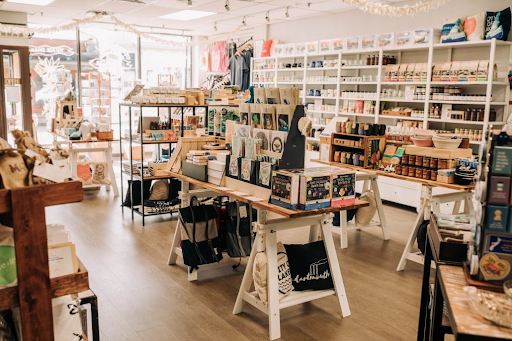
There are countless accounts you can follow to keep yourself aware of current events and ways you can help your local community. Any petitions or fundraisers that are on the go are probably being advertised on social media. Besides keeping up with the news to know what’s going on in the world, it’s important to hear people’s firsthand experiences outside of news stations. Social media as a form of activism is primarily useful for raising awareness about current issues, as news stations may not cover all the details or all perspectives of a problem. With social media activism, it is important to understand how easy it is to fall into the trap of performative activism; without actual action, social media activism can be useless. Still, online activism is a great platform for community building, amplifying marginalised voices, promoting resources, and influencing/educating people. Here are some great accounts to follow to get yourself started.

Craftivism
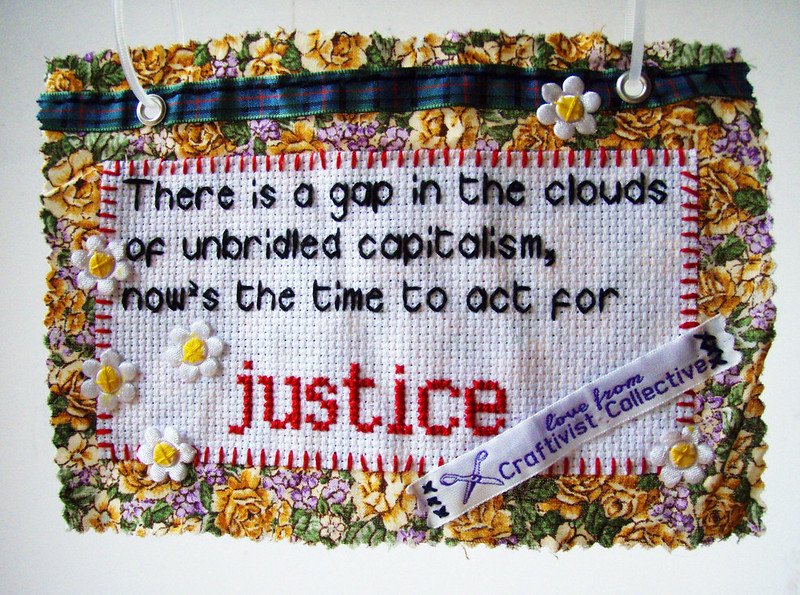
Craftivism is exactly what you might think: activism through crafts. This might include anything from knitting to sewing to cross-stitching. Usually, these crafts were activities primarily done by women. Through craftivism, these gentle activities become powerful emblems of hope and change centered around political issues and social justice. One of the most famous examples of craftivism is the AIDS Memorial Quilt. This quilt, a beautiful memorial to folks whose lives were taken by AIDS, is actually available online for the whole world to view. A more local and recent example of craftivism is the Nova Scotia grief and solidarity quilt for Palestine. Click here for information on how to contribute to this local project. For more ideas on what craftivism projects you can do, check out the Craftivist Collective!
Mutual Aid and Community Building
At the core of humanity, we are a community. Mutual aid is just one way communities can come together to support individuals within the group; it is an action based on grace and generosity, giving without the expectation of return. This could mean anything from fundraising money for someone who lost their home in a fire or making soup for a neighbor who is sick. By coming together as a community and by supporting people in your local area, changes can be felt, and people can be helped outside of pre-existing (often faulty) systems.
Here are some great mutual aid ideas that you can do in your community!
Give away old clothes to someone you know who needs them and will appreciate them, instead of selling them or donating them to a corporation like Value Village.
Keep people informed about events or resources (like free classes or affordable produce sales) through social media or word of mouth
If you’ve made a pile of leftovers and they’re about to go bad, or you’ve decided to try out a new granola bar brand but you just don’t like them, give them away! Food doesn’t have to be wasted, and people around you might need it or simply appreciate it.
Share your skills and abilities with others! You may be an amazing sewer and can fix up a ripped hoodie for a friend, while they may be handy with hardware and can fix your broken sink the next week. Everyone has their own talents that are best shared!
Check out Halifax Mutual Aid for info on Haligonians using mutual aid to help combat the houselessness crisis in Halifax.

Conclusion
It’s easy to feel powerless in this ever-changing world filled with many massive issues and problems that need to be addressed. Change is small, it’s personal, and it does start with you! I hope these activities and ideas have given you some inspiration and have encouraged you to get involved locally or internationally. Keep fighting, keep loving, and the change we experience can be for the better!