
Integrated campus experience: A psychological and human perspective
Written by Ritika Sharma
Thumbnail and banner photo by macleans.ca
Balancing Academic Pressure with Personal Well-Being
University life often comes with multiple pressures: research, deadlines, teaching, financial concerns, personal life, and maybe even relocation for an international student. Students need more than academic support. They need emotional support, mental rest, and a sense of stability. Accessible counseling, quiet rooms, and peer support contribute to a campus climate that feels safe and healthy. When students believe that their institution cares about their well-being, they are more likely to reach out for help, take breaks, and avoid burnout.
Mental health is also shaped by small, everyday interactions, like the friend who sits next to you during a late-night study session in the graduate lounge in the Sobey building, the Tim Hortons worker who remembers your usual order, or the trivia teammate who celebrates your one correct answer like you’re a champion. These micro-connections create what researchers call “place attachment”. Over time, they build emotional stability and resilience: sometimes more than formal counseling.
Understanding the Campus as a Living Ecosystem
A University campus is not only a collection of buildings. It is a living ecosystem shaped by the daily movement of students, the emotional rhythms of academic life, and the silent systems that hold everything together. Research consistently shows that campus environments influence motivation, stress levels, and sense of belonging for students.
When students walk across the hallway early in the morning or stay in the library until late at night, they are not just fulfilling academic duties. They're absorbing the atmosphere of a place that slowly, almost unconsciously, becomes a psychological home. The integrated campus experience is spelled in facilities, programming, and routines that touch mental health in a subtle but important way.
Safety, Security, and the Mind’s Hidden Landscape
There are moments on campus that abruptly break routine. A fire alarm rings on a cold evening. The halls flood with startled students. Studies show that sudden alarms trigger the brain's protective hyperalert system. On campuses where support is weak or a sense of belonging is slow, hypervigilance becomes chronic and contributes to anxiety and depression.
In those few disorienting minutes outside in the cold, students imagine worst-case scenarios. They think about losing essential belongings, academic work, their passport, and emotionally valuable items, even if they know that the situation is not that bad. That imagined danger makes them realize the importance of structured emergency protocols, clear evacuation rules, and trained personnel.
Campus safety infrastructure is more than a formal requirement. It is a mental safety net. Fire alarms, emergency drills, and responsive security offer reassurance that someone has prepared for the worst. For many graduate students, especially international students living far from home, that reassurance forms a psychological anchor during periods of heavy academic and personal stress.
When the alarm ends, and everyone is allowed back inside, there's a strange sense of unity. For a moment, hundreds of students share uncertainty and release. In that moment, the campus becomes more than architecture; it becomes a shared emotional landscape.
Social Programming as Emotional Fuel
Campus social events play a decisive role in maintaining mental health. Consider a weekly event, such as Wednesday trivia. It is more than that. It becomes a ritual, a weekly emotional anchor. Students gather, laugh, compete, and let themselves forget about deadlines for a few hours. Psychological research suggests that such micro moments of joy, social connection, and laughter strengthen emotional resilience and reduce burnout. On campuses where the environment feels supportive, students report lower psychological distress and greater willingness to seek help.
For many undergraduate students, trivia night is a brief escape, a pause from constant reading, writing, or coding. Some arrive alone and make new friends that night. Others come with their study group. The gentle rhythm gives the mind something to look forward to. It becomes part of the mental health maintenance routine, often unconsciously.
These social programs act as an emotional buffer. They help break the isolation, stress, and burnout that can build up in the lives of graduate students. For many people, these events become as important as classes or labs because they defeat the soul and build a sense of belongingness.
Physical Infrastructure and Everyday Mental Well-Being.
Something as simple as the location of a coffee shop can shape a student’s day. When a café sits conveniently between classes or next to study halls, it becomes more than a coffee stop. It becomes a psychological transition zone. Students pause, breathe, and reset. Environmental psychological research shows that exposure to well-designed campus surroundings supports mental and emotional recovery.
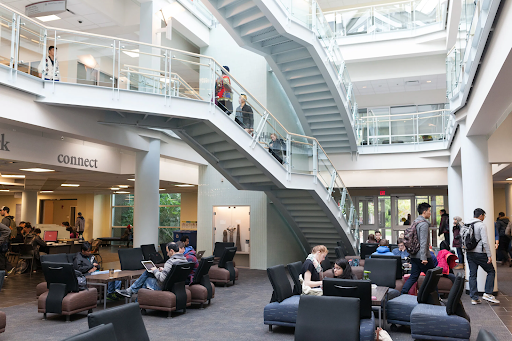
Wide hallways, a green courtyard, and daylight-filled lounges. Getting that first Tim’s coffee somehow softens the stress of the day. Even the distant murmur of conversation in a student center can create a sense of belonging and normalcy. An integrated campus is designed not just for convenience, but for the involvement of the students. The architecture becomes emotional.
How Daily Campus Routines Shape the Student Mind
Every institutional decision, which buildings stay open late, where to place a food outlet, how to host a social event, how often to host social events, what kind of events to host before the exams, or what kind of events to host during Welcome Week, all these events shape students ' mental patterns and sense of stability. Campuses that provide accessible green spaces and long library hours often see lower reported anxiety and improved performance.
Predictable weekly events, such as trivia night, also give the mind something to anticipate, providing a positive environment, mental support, and motivation, and it can reduce perceived stress, aligning with research on anticipation and reward systems in the brain. Walking paths and green spaces influence how students move physically and mentally through their day. More walkable campuses are linked to improved emotional well-being. A campus is a psychological ecosystem, every designed decision, every event, every program, and every small space contributes to the mental health of its members.
Integrated Campus Life as a Human Experience

Photo by SMU Instagram
When students look back on their time at university, they often remember moments rather than milestones. They remember rushing out of the residence during a fire alarm, standing in the cold, and laughing nervously with others. They remember arriving at trivia night, exhausted, and leaving with a smile. They remember the Tim Hortons that felt like a safe space on campus. An integrated campus experience is not just about, it is about how those structures influence emotions, interactions, identities, and mental health. Institutions that build with this perspective create an environment where students do more than. They find community, healing, creativity, and resilience. The campus becomes a mirror, reflecting who students are and who they can become. Universities hold the responsibility and the opportunity to design spaces that support mental health, not only academic achievement, where they can shape not only careers, but human lives.