A Review of Guillermo del Toro’s Frankenstein
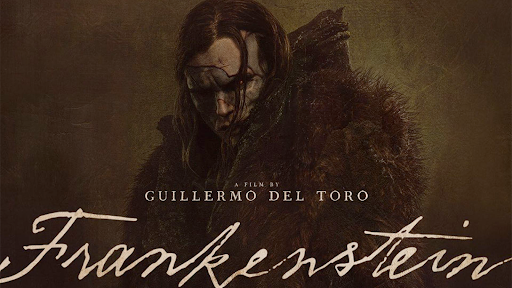
Photo by Netflix on Creative Bloq
By: Leah Oake
Recently, I watched Guillermo del Toro’s Frankenstein. Going in, I was extremely excited about the film. I am a massive admirer of Del Toro’s work, so I was thrilled he got to create this adaptation of one of my favourite books. Before I go into my review of the film, here is some context on Del Toro and the book. Guillermo Del Toro is a Mexican director, screenwriter and producer. He is known for moulding horror and fantasy films with emotional and thematic complexity. Some of his notable films are The Shape of Water, Pan's Labyrinth, Crimson Peak and Pacific Rim. He is a highly well-known director, and every actor who works with him praises his creative vision and revolutionary filmmaking techniques. Frankenstein is a novel written by Mary Shelley. Shelley is an esteemed Romantic-era writer who wrote this classic at just 15 years of age. The plot centers on Victor Frankenstein's efforts to create a living being from the body parts of various people. Once successful, he regrets his creation and creates a divide between himself and the creature, despite the creature's initially meek and innocent nature. This book is substantial in literary history and pop culture. It has gone through dozens of variations and adaptations, from the character Frank in Hotel Transylvania and Frankenweenie to its influence on The Rocky Horror Picture Show. Little did Shelley know that, when she wrote this book, she created a staple of pop culture that would remain relevant for years to come.
Initially, going into watching this film, I had a mix of emotions. I have loved the story of Frankenstein ever since I first read the book in high school. After my first read, I think all my former teachers and following professors had a ploy to get me to read it as much as humanely possible. I’ve read it throughout my university career more than 11 times for classes over the past 4 years (and I am scheduled to reread it for a class this winter semester). So, it’s safe to say I know the book (1818 version) inside and out. I am a huge fan of Del Toro’s work, and I was confident in the casting, having seen Mia Goth, Oscar Issac and Jacob Elordi in other works.
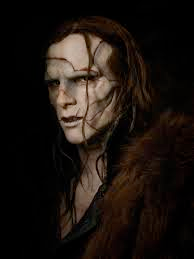
Jacob Elordi as The Creature from Netflix
The best aspect of this film, by far, was Jacob Elordi. The creature's makeup and costume design were perfect. His appearance was eerie and unsettling, yet his acting transformed him into a meek, fearful character. Elordi excelled with what he was given, despite being the actor I was most wary of. All of the aspects of media I have seen him in, in his performances, have been good, but did not feel very translatable into this drama-horror film (e.g., Euphoria). His character was fully fleshed out, and the progression was remarkable. His initial meek manner transformed into a bloodthirsty, vengeful being, an incredible sight to watch. This role changed my perception of Elordi, and it will be career-changing for him.
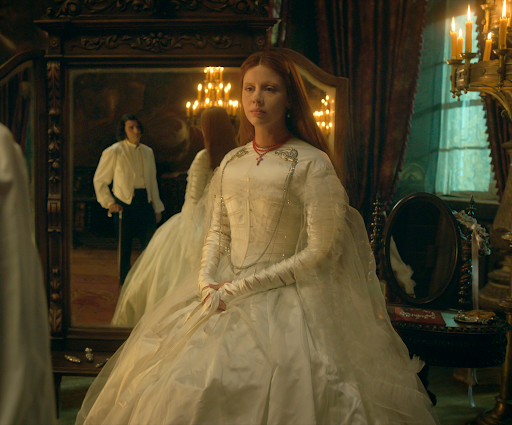
Mia Goth as Elizabeth Frankenstein from Netflix
In addition, the costumes and makeup in this film were exceptional. Mia Goth played Elizabeth exceptionally well. She captured the character's soft nature while still portraying her as an intellectually strong woman. I have issues with the choices made for the character, but none of that has to do with Goth’s performance.
Another massive win for the film was its soundtrack, composed by Alexandre Desplat and featuring Norwegian violinist Eldbjørg Hemsing. The soundtrack is full of sombre stringed melodies that blend with a dark rumbling sound. The music is accompanied by ghostly female choral voices and low electronic pulsing, intended to represent the film's gothic themes of death and life. Desplat says that the pulsing was chosen to represent the power Victor held when bringing the creature to life. The music alternated between gothic symbolism and Victorian waltz, seamlessly integrating every aspect of the film through transcendent music. Finally, the cinematography was outstanding. Every still shot and frame was gorgeous.
Moving on to my critiques of the film. My general thought after watching this film was that it was not the Frankenstein story I knew. I wish the film were titled differently, so I wasn't expecting it to be an adaptation; if anything, it was a film influenced by Frankenstein, not an adaptation. I was confused about why certain characters were chosen over others. Where was Henry Clerval?! Many characters were cut entirely, or minor characters from the novel were given bigger roles. There was so much focus on William (much more than in the book), and Henry was nowhere to be found. The main differences I noticed stem from the differences between Shelley and Del Toro. Shelley was a radical thinker and an atheist.
In contrast, Del Toro is a Catholic Christian who works to depict that imagery in his films – you can see it in the cross imagery during the creation of the creature. I think a lot of the tonal shifts were due to this. The jarring change from fear of the creature's rage to the weird, happy ending was strange. I think this is because De Toro was going from a theme of forgiveness and acceptance. But that is not what the story is about.
In addition, another problem I had was Oscar Isaac's decision to play Victor. It is clear he is an incredible actor, but the character of Victor is in his 20s. Oscar Issac does not look that age in the film, and as the film progresses, he seems older. With that change, the character of Victor is altered, and not for the better. He is more physically ragged and apologetic.
My main issue was that some pivotal scenes that make this story what it is were missing. The confusion about the children's death and the blind man's storyline was changed entirely or omitted. These scenes are the moments the creature learns about humans and his place in the world. His rage and anger are less rounded without these aspects.
This film had a lot of potential. The cast was great, and the vision seemed clear, though I don’t believe it was executed correctly. I still think that making movies based on this literary dynasty is a good idea. The films bring these stories to new audiences, thus continuing the legacy for years to come. I hope it continues. Without some book-to-movie adaptations, I would be unaware of some of my favourite stories today. I think this film should have been marketed as influenced by Frankenstein, not as an adaptation. You should still give the movie a shot, but unfortunately, it missed the mark for me.