
What’s Really Going on With the Olympic Hockey Rink?
Written by Matthew Lloyd
Thumbnail and Banner Photo by Hansjörg Keller on Unsplash
As we head into yet another Olympic cycle in the coming weeks, many dedicated hockey fans have grown increasingly anxious. The state of the Olympic hockey venue, which has yet to wrap up construction, has generated a media circus, with the February 5th deadline fast approaching. Between concerns about the rink's size not meeting traditional international standards, incomplete dressing rooms, missing concessions stands, and more, many Canadians and international hockey fans alike have raised the alarm, asking, “Will the rink be ready in time?” With Christophe Dubi, the IOC’s Olympic Games executive director, stating that “it’s all hands on deck,” with an estimated 1,600 workers a day,it is clear that many uncertainties remain. This article will attempt to piece together all the information we currently have, arriving at a conclusion on whether our beloved ice hockey is indeed in jeopardy in the year that NHL players finally return.
The Milano Santagiulia Ice Hockey Arena, the primary of two venues for Olympic hockey, is the one that remains plagued with construction delays and continues to be furiously worked on. The Milano Rho Ice Hockey Arena, the games’ secondary hockey venue that will host the women’s preliminary games and some men’s prelims, is a temporary facility that has been completed well ahead of schedule and is not a concern to organizers. Our focus today is on the primary venue, which we have been hearing whispers about for months. In early December, news began to break regarding the size of the ice that the players would be skating on. Peter DeBoer, Team Canada’s assistant coach, stated on the Sportsnet Podcast “Real Kyper and Bourne”, that when visiting the venue, “the ice surface is smaller than NHL standards by about three to four feet.” While international hockey is typically played on a different size than the NHL standard, the size difference had traditionally led to a larger and a more open playing surface, rather than a more constrained one, as DeBoer had revealed.
Think pieces ran rampant for days following DeBoer’s revelation, with the International Ice Hockey Federation (IIHF) putting out a statement on December 8th confirming the exact dimensions of the ice surface. These dimensions (60.0m x 26.0m) had been used previously at the 2022 Beijing Olympic Winter Games, were consistent with those of previous NHL Global Series games played in Europe, and had been agreed upon years in advance. This information should have quelled much of the uproar around the size of the ice, yet it was mostly ignored by many hockey fans.The size of the surface dominated much of the commentary, with questions regarding the obvious risks, such as “tighter spacing, more collisions, and intensified board play”, which gave pundits a lot to gripe about. This surface would allow “less time and space to make plays—and less time to avoid hits”, yet I believe these critiques are a bit overblown given past experiences on this size of ice. Given the other, more real concerns about the state of construction for the Milano Santagiulia arena, fans would be better served by tabling the rink size discussion.
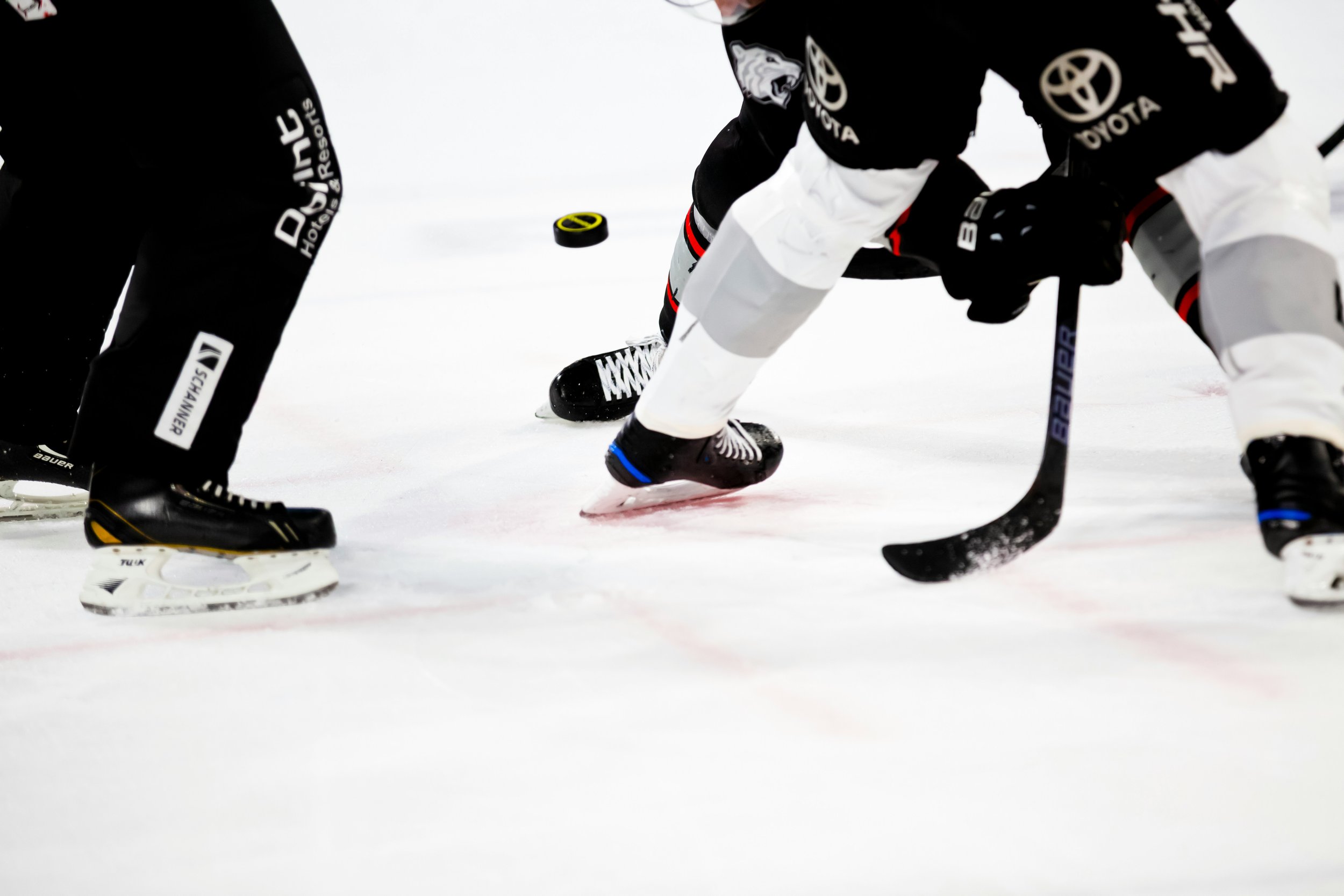
Another current concern about the ice surface stems from the recent test event at the venue, where the first hockey game was played on the new rink. Issues such as the ice being soft and a small hole appearing that stopped play raised further alarm bells. While there was certainly “still a lot of room for improvement”, as reported by the players, some issues are to be expected in the first game on a newly laid ice sheet.The hole previously mentioned on the ice surface was described as “a normal occurrence for ice being skated on for the first time,” with Dan Moffatt, the entrusted “ice master,” overseeing the care of the ice. Having worked four previous Olympics, he’s been providing the necessary experience that has eased some of these concerns.
The latest reporting from CBC, as of January 27th, draws heavily on the words of Dubi, as quoted earlier, in his feverish defense of the venue’s ability to be completed before the games begin. Dubi acknowledges that there is still work to be done in a few key areas, such as “the concourse, as well as building temporary facilities like locker rooms.” These locker rooms are said to be on course to be ready in a matter of days. However, details are hazy on a number of issues that are evident in recent video walkthroughs of the arena just two weeks ago. The video linked shows electrical wires visible to the naked eye in a smattering of places around the arena, missing seats, elevators that are not yet functioning. It also indicates only 1/4 of the locker rooms being completed, and many other obvious issues, not to mention the smaller details hidden behind the scenes. While these issues are glaring and certainly concerning, this is not a unique situation to these Olympic Games. In 2016, it was widely reported that many of the venues for the Rio Summer Olympics may not be fit for competition in the months leading up to the games, and some of these concerns came to light in the infamous “green pool water” incident. While some of these concerns were realized, many of the glaring issues present ahead of the 2016 games were rectified in advance, with the state of the Milano Santaguilia Ice Hockey Arena already better than that of many of the finalized venues for the 2016 games.
If asked what I think the venue will be like once the competition kicks off, I’d say there will be a mix of fully completed areas and a few small, neglected areas that were deprioritized out of necessity. This is already evident in the reduced number of seats at the venue, which was originally announced with a capacity of 14,000 and is now 11,800. I imagine some concessions may remain uncompleted, but with an attempt to cover them over and I also imagine some small visual defects still present. Yet, I do not anticipate there to be any issues with the most important aspect, the ice surface itself. Time will tell just how right or wrong I am, but here’s hoping that all goes well in Italy. I’ll be back a bit more than usual this February, as I will be covering the Olympics extensively. Keep your eyes out for more Olympic content coming your way soon!